


HER Lesbian, bi & queer dating
4.313.70K Reviews
App Specs
- Version
- 3.29.23
- Updated On
- License
- Free
- Downloads
- 5,000,000+
- Developer
- HER App
- Categories
- Social
- Platform
- Android
Screenshots
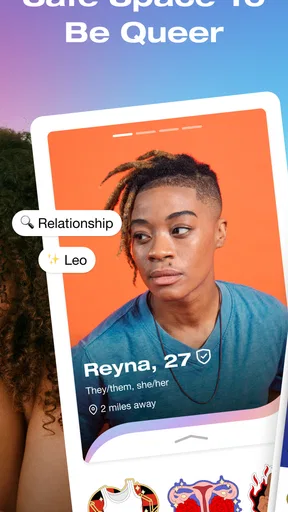
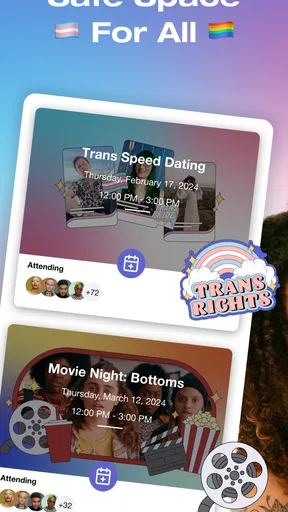
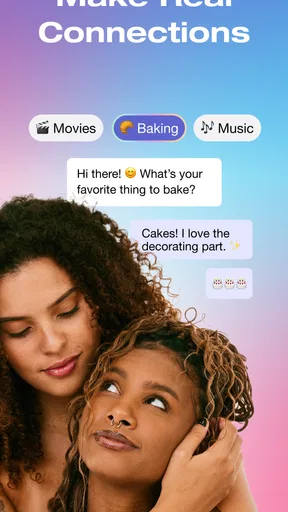
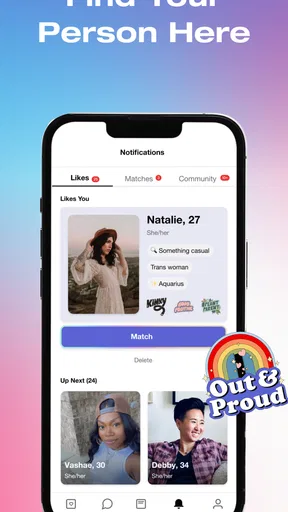
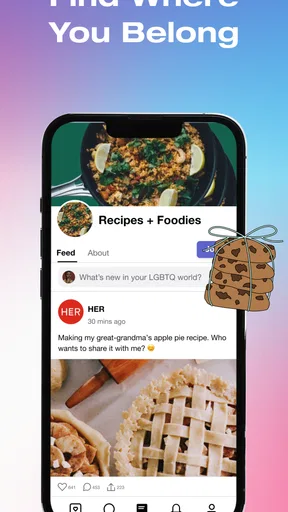
 Analysis by AppCompare
I approached HER Lesbian, bi & queer dating as someone looking for more than a quick stream of profiles. It is a social app built around dating and community for gay, bisexual, non-binary, trans and queer women, and that focus changes the feel of the experience from the first screen. Instead of asking you to fit into a broad dating crowd, it places queer connection at the center.
My first impression was that the app makes the most sense when you treat it as two things at once: a way to meet potential partners and a place to find people with shared identity or interests. That combination can be reassuring if mainstream dating apps have made you tired of explaining yourself. It can also feel less direct if you only want a fast, highly filtered search for a relationship.
HER is free to install, although it includes optional in-app purchases ranging from $0.99 to $179.99 per item. I would begin with the free experience and only consider spending money after understanding how active the app feels in your area and whether its extra options solve a problem you actually have.
What to expect when you open HER
The app belongs to the social category, but its purpose is more specific than a general social network. The developer, HER App, presents a space where dating, identity and community overlap. That means your experience can depend heavily on what you want from it. Someone hoping to meet a girlfriend may use it differently from someone seeking queer friends, local conversation or a more comfortable alternative to mainstream dating platforms.
That wider purpose is one of the strongest reasons to try it. On a conventional dating app, every interaction may feel like an audition for romance. Here, the social side can make the environment feel less narrow. You can approach the app with a dating goal while still appreciating that not every useful connection has to become a date.
At the same time, I would not install it expecting a guaranteed stream of compatible matches. Like any location-based dating service, the quality of the experience depends on the people nearby, how recently they have been active and how clearly they describe what they want. A smaller city may offer a more limited pool than a large urban area, while a busy area can bring the opposite problem: plenty of profiles but more effort required to find genuine compatibility.
The audience is explicitly mature. The content rating is Mature 17+, so this is not an app for teenagers or anyone uncomfortable with adult dating conversations. That does not mean every interaction will be serious or intimate, but it does mean you should approach the space with ordinary dating-app caution and clear personal boundaries.
Worth Reading Before You Choose

Flipboard Shows What News Apps Must Do Beyond the Feed

Switching to Android Auto Means Rethinking Your Driving Routine

Google Calendar Makes a Crowded Week Easier to Manage

Ludo King Makes the Most of the Minutes Between Plans

Baby Panda World Brings Quick Play to Modern Phones, but Its Game Library Feels Busy

ESPN’s Live Game View Makes Following Close Games Easier
The app has been available since June 16, 2016, and its current version is 3.29.23. Its scale is also substantial, with over five million installs, an average rating of 4.3 from around seventy-two thousand ratings, and roughly fourteen thousand written reviews. Those figures suggest that HER has reached a broad audience, but they should not be mistaken for a promise that your local experience will match everyone else’s.
Who will get the most from it
I think HER is especially useful for someone who wants queer-focused dating without having to repeatedly establish the basics of their identity. It may also suit a person who is new to queer dating and wants a space that feels more intentionally centered on women and gender-diverse users. The social angle is valuable when you have recently moved, are exploring your identity, or simply want conversations that do not begin with a long explanation of who you are.
It is less suitable if you want a purely private, one-purpose dating tool with no community dimension. If your priority is a very specific age range, profession, lifestyle or relationship structure, another service with stronger search filters may be more efficient. HER can help you discover people, but discovery is not the same as precise matchmaking.
The first setup: make your profile do useful work
My advice is not to rush through setup with a single photograph and a vague sentence. A profile that says almost nothing forces every conversation to start with an interview. Instead, choose images that show how you normally look and spend time, then write a short description that gives someone an easy, respectful opening.
For example, mention the kind of connection you are open to, a hobby you genuinely enjoy and one detail that makes your everyday life recognizable. You do not need to reveal your workplace, exact neighborhood or anything that makes you uncomfortable. The goal is to make your profile specific enough to invite conversation without turning it into a personal dossier.
Be equally clear about relationship intentions. If you are dating seriously, say so in a calm way. If you are open to friendship first, make that visible. If you are still figuring things out, that is also useful information. Ambiguity can attract more replies at first, but it often creates mismatched expectations later.
One practical tip is to prepare your boundaries before you begin messaging. Decide what you will not share early, when you would feel comfortable moving a conversation elsewhere and what behavior will make you stop replying. This sounds obvious, yet it matters more in a community-focused app because a friendly conversation can shift toward dating quickly.
Do not treat setup as a one-time task. After using the app for a while, revise wording that attracts the wrong kind of attention. If you repeatedly receive messages that ignore what you wrote, the problem may not be your profile alone, but a small change can help you signal your priorities more clearly.
Finding the first meaningful interaction
The easiest first success is not necessarily getting a match. I would define it as finding one person whose profile gives you a natural reason to write. That approach keeps the process manageable and makes your opening message feel personal rather than copied.
Instead of sending only a greeting, refer to a detail the person chose to share. Ask a question that can be answered without effort, and offer a little information about yourself in the same message. A note such as “I also spend weekends looking for new cafés; what kind of place do you usually choose?” creates more room for a real exchange than a generic compliment.
Keep the first message light, but do not make it empty. Humor can work, although sarcasm and comments about appearance are risky with someone who does not know your tone. I found that curiosity works better than trying to impress. You are not auditioning for a perfect first line; you are checking whether conversation feels comfortable on both sides.
A useful workflow is to browse briefly, select a small number of profiles that genuinely interest you, and then return later to answer replies with attention. Sending messages to everyone may feel productive, but it usually creates shallow conversations and makes it harder to notice who is actually engaging with you.
Once someone replies consistently, move from profile-based questions to shared context. Talk about how they like to spend a free evening, what they are hoping to find or what makes them feel comfortable meeting someone new. These questions reveal compatibility without demanding personal information too soon.
If a conversation becomes promising, do not let the app’s dating purpose pressure you into meeting immediately. A short voice or video conversation elsewhere may help you decide whether the person’s communication style feels genuine, but only do that when you are comfortable and after considering your privacy. For a first meeting, choose a public place, tell someone you trust where you will be and arrange your own way home.
Where new users commonly get confused
The biggest point of confusion is the difference between dating and community. Not every person you encounter will be approaching the app with the same intention. Some may want romance, some friendship and some a flexible connection that develops naturally. Read profiles carefully and ask directly, without sounding accusatory, what the other person is hoping to find.
Another common mistake is assuming that a good profile automatically creates fast results. HER is not a vending machine for dates. A strong profile improves your chances of attracting a suitable conversation, but timing, distance and local activity still matter. If the first few days are quiet, that does not necessarily mean the app is failing or that your profile is bad.
Paid options can create a different kind of uncertainty. Because the app is free with optional purchases, you can explore its basic experience before paying. The available purchase range is wide, so I would avoid buying anything impulsively after a disappointing browsing session. First identify the exact limitation you are trying to solve, then check whether the purchase is worth that benefit for your own usage.
There is also a subtle emotional trap in profile browsing. A large number of choices can make every person seem replaceable, while a smaller local pool can make each unanswered message feel personal. I recommend setting a short browsing window and taking breaks. Dating works better when you remain curious instead of treating every interaction as a test of your value.
Safety deserves more than a quick reminder. Do not send money, share sensitive documents or provide an exact home address to someone you have just met. Be cautious if a person quickly pushes you away from normal conversation, refuses reasonable questions or creates pressure around secrecy. The app’s queer focus may help you find people who understand your experience, but it cannot remove the need for judgment.
How HER compares with familiar alternatives
Compared with a broad dating app, HER’s main advantage is focus. You are less likely to spend your time filtering through people who do not understand why queer identity matters to your dating life. The community element can also make the experience feel less like a narrow search for a partner.
The trade-off is breadth. A mainstream service may have more people in a particular area, more elaborate discovery controls or a larger range of relationship categories. If your top priority is maximum local volume, you may prefer to use a general platform alongside HER rather than replacing it completely.
Compared with a general social network, HER is more intentional about meeting and connecting with queer women and gender-diverse people. That can make it easier to communicate romantic interest, but it also means you should be more explicit about your intentions. A casual social interaction may be interpreted as dating interest if your profile and messages do not explain what you want.
I would not judge the app only by whether it produces a date quickly. Its best use may be as one part of a wider routine: browse when you have the energy, participate in conversation when something feels promising and leave when the atmosphere no longer feels healthy. That is a more realistic way to use a social dating app than expecting it to solve loneliness on demand.
Small habits that improve the experience
First, write for the person you want to meet rather than trying to appeal to everyone. A profile with a clear personality may receive fewer random messages, but the conversations it attracts can be more useful. This is one of the most important trade-offs in HER: broad appeal creates activity, while specificity helps filter for fit.
Second, use the community side deliberately if dating conversations feel repetitive. Shared interests can reveal compatibility more naturally than a sequence of standard questions. You may learn more from how someone responds to a discussion about an activity or local interest than from a polished list of dating preferences.
Third, keep a simple mental record of how conversations make you feel. Do you leave exchanges energized, respected and curious, or tense and obligated? That reaction is practical information. A profile can look perfect while the conversation shows poor listening, pressure or incompatible expectations.
Fourth, do not confuse frequent messaging with genuine progress. A person who replies quickly is not automatically a better match than someone who communicates more slowly but thoughtfully. Look for consistency, respect and willingness to discuss expectations. Those qualities matter more than an impressive opening exchange.
Finally, protect your attention. Turn the app into a small part of your day instead of checking it whenever you feel bored. This makes it easier to notice meaningful interactions and reduces the temptation to accept a connection simply because it is available.
What to do after the first good conversation
When a conversation feels promising, the next step should be a small increase in trust rather than a dramatic leap. Share another ordinary detail, suggest a low-pressure topic or ask whether the person would prefer to continue chatting at another time. Their response to a reasonable pace tells you a great deal.
If you decide to meet, choose an easy plan with a clear ending, such as coffee or a walk in a busy public area. Avoid making the first meeting an expensive event or an all-day commitment. You want enough time to see whether the connection works in person, but also a comfortable exit if it does not.
If friendship is your real goal, say that before meeting. HER’s social side makes that possibility legitimate, but clarity prevents disappointment. Likewise, if you are interested romantically and the other person is not, respect the difference rather than trying to negotiate them into changing their mind.
For users who are new to queer dating, the app can be a gentle starting point because it gives identity-focused connection a central place. Still, “comfortable” does not mean effortless. You may encounter mismatched intentions, quiet periods or conversations that fade without explanation. I found the experience more rewarding when I treated those moments as normal parts of online dating rather than personal verdicts.
People who should skip HER are those who dislike any social element around dating, want highly technical filtering above all else or are not ready to communicate boundaries. A different dating service may be better if you need a very large local pool or a narrowly defined matching system. HER is strongest when you value queer-centered discovery and community alongside dating.
For a first-time user, my recommendation is simple: install it, build a profile with enough personality to start a conversation, browse slowly and send one thoughtful message instead of many empty ones. Give the free experience time to show whether the people and pace suit you before considering optional purchases. With realistic expectations, HER can become a useful place to meet people who understand the context you are dating in, not just another feed of faces.
Overall, I see it as a welcoming but imperfect option for queer women and gender-diverse users who want dating to exist within a broader social setting. It will not remove the uncertainty of meeting strangers, and it cannot guarantee compatibility. What it can do is make the first step feel more relevant, more focused and, for the right person, considerably less isolating.
Pros
- Inclusive space designed specifically for lesbian
- bi
- and queer users.
- Offers community features beyond dating
- including social content and discussions.
- Profile filters can help users find people with similar interests and identities.
- Useful for meeting local queer people in areas with an active user base.
- Safety tools let users manage visibility
- interactions
- and unwanted messages.
Cons
- Some features require a paid subscription or in-app purchases.
- The quality of matches depends heavily on activity in your local area.
- Profiles may include social or promotional content beyond dating intentions.
- Notifications can feel frequent if community features are enabled.
- Users should still verify identities and meet cautiously in person.
FAQs for HER Lesbian, bi & queer dating
What is HER Lesbian, bi & queer dating, and who is it designed for?
HER is a dating and social networking app created primarily for lesbian, bisexual, queer, and other LGBTQ+ women and non-binary people. During testing, it felt more community-focused than a standard swipe-only dating app, combining profiles, matching, messaging, events, and social feeds. Users should review the available identity and orientation options carefully so their profile accurately reflects how they want to connect with others.
Is HER free to download and use?
HER can generally be downloaded for free, and the basic version provides access to profile creation, browsing, matching, and some messaging or community features. However, the app also offers optional premium subscriptions or paid upgrades that may unlock additional filters, unlimited likes, advanced discovery tools, or other conveniences. Pricing and included features can change, so check the current in-app subscription details before starting a trial or purchase.
How does matching and messaging work on HER?
After creating a profile, you can browse other members based on location, preferences, and available discovery settings. Depending on mutual interest and the app’s current features, matching may allow users to begin a conversation. HER also includes community-oriented spaces where people can interact beyond traditional dating. A complete profile, recent photos, and a respectful introduction usually make it easier to receive meaningful responses.
Is HER safe and private to use?
HER includes tools intended to support safer LGBTQ+ dating, such as profile controls, blocking, reporting, and privacy settings. Nevertheless, no dating platform can eliminate every risk. Avoid sharing your home address, financial information, private documents, or intimate content with strangers, and consider using in-app communication until trust is established. Arrange first meetings in public places and report suspicious, abusive, or impersonating accounts promptly.
Does HER work for people seeking friendship, community, or events instead of dating?
Yes. Although HER is widely known as a dating app, it also supports social discovery and LGBTQ+ community interaction. Users may find people interested in friendship, conversation, local activities, or community events rather than romantic relationships. Your experience will depend on your location and the number of active members nearby, so clearly state your intentions in your profile and respect the preferences shown by other users.


